
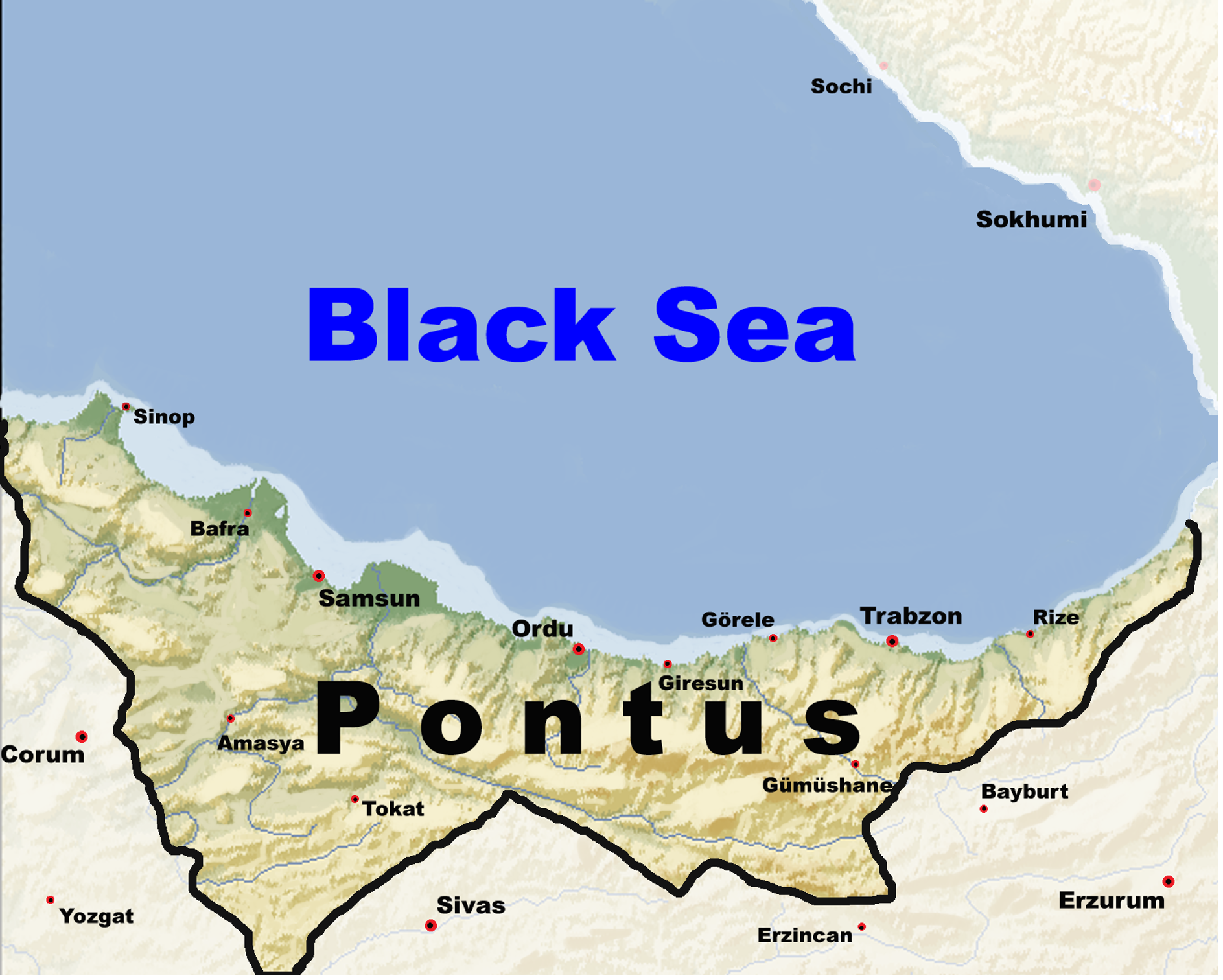
Deportations of Pontian Greeks in 1942 and 1944: Examining the Causes, Scale, and Locations
The period of Stalin’s terror was marked by numerous acts of mass deportation of ethnic groups. One of the lesser-known, yet no less tragic events, was the forced deportation of Pontian Greeks, which occured in 1942 and 1944. During these two waves, Soviet authorities forcibly deported over 30,000 Greeks from Ukraine and the areas surrounding the Sea of Azov to Kazakhstan and other uninhabited regions of the Soviet Union. Despite the ongoing World War II, the Soviet leadership continued forced deportations, aiming to subjugate and ethnically cleanse of the territories, even targeting relatively small groups such as the Greeks. This article will discuss the background, causes, and consequences of this Soviet policy.
The Greek ethnic group has resided in the territory of Ukraine since the 8th century B.C. The Black Sea Greek colonies, such as Olvia, Thyras, and Chersonesus, served as significant trade and cultural centres. Throughout Ukraine’s history, they maintained their status as port cities, facilitating contact with other cultures and ethnicities through the mediation of merchants and sailors.
During the Soviet occupation of Ukrainian territories in the 1920s, the Soviet leadership initiated a policy of “korenizatsiya” (indigenization), aimed at involving native peoples in state development due to the existing inequality between Russian and non-Russian peoples in the country. Consequently, Greek schools were established, a Greek department was founded at the Mariupol Pedagogical College, the newspaper “Kolechtivistis” began publication, and Greek libraries and cultural centres were opened. On February 23, 1932, the first State Greek Theatre in the USSR was inaugurated in Mariupol.
Thus, Greek education and culture in the Ukrainian SSR saw significant development but faced suppression in the subsequent years of Stalin’s terror.
With the establishment of Soviet rule, the Greeks, like many other groups, became subject to the policy of “dekulakization,” a strategy pursued in the USSR in the late 1920s and early 1930s to eliminate “kulaks”, or wealthy peasants, as a class. Traditionally involved in trade and agriculture, the Greek population possessed land and wealth; thus, transferring these assets to state ownership was not in their interest. Moreover, they insisted on maintaining their Greek nationality, rejecting Soviet citizenship. This resistance to Soviet policies provided the authorities with a formal pretext for mass arrests and subsequent deportations.
In 1931, nearly one-tenth of the Greek population in Ukraine underwent dekulakization and were deported to Kazakhstan. Between 1931–1932, Greek villages experienced a labor resource depletion ranging from 10 to 20% of their population [2, p. 162].
However, between 1935 and 1937, there was a significant escalation in the Soviet Union’s state policy regarding national relations, spurred by the implementation of agricultural collectivization. This initiative was not as successful as the propaganda machine portrayed it to be. Collectivization unfolded under challenging circumstances in the multinational and densely populated regions of the country, and resistance to it led to severe punishments from the government. Repressive measures were consistently applied, targeting not only to individuals and groups but entire nations.
For example, the NKVD Directive No. 50215, issued on December 11, 1937, initiated the “Greek Operation”. The People’s Commissar of Internal Affairs of the USSR, N. Yezhov, rationalized the necessity for punitive actions against individuals of Greek nationality, accusing them of forming a network of nationalist, espionage-sabotage, and malicious organizations with the intention to destroy the Soviet system.
Local NKVD offices were instructed by the People’s Commissar of Internal Affairs of the Ukrainian SSR, I. Leplevskyi, to detain Greeks. This directive initiated a large-scale operation, resulting in an arrest of over 20,000 Greeks in the southern regions of Ukraine. To provide some context, the 1939 census reported a total of 286,444 Greeks living in the USSR [8, p. 220]. The “Greek operation” did not conclude the repressions; instead, they escalated with the advent of World War II.
On April 4, 1942, L. Beria signed Directive No. 157, mandating the NKVD Administration in the Krasnodar Krai and Kerch to “immediately commence the cleansing of areas including Novorossiysk, Temryuk and Kerch, as well as settlements on the Taman Peninsula and the city of Tuapse, targeting anti-Soviet foreign and suspicious elements…” This group encompassed individuals identified as Germans, Romanians, Crimean Tatars and Greeks.
At the end of May 1942, the State Defense Committee (GKO) adopted Resolution No. 1828ss, It mandated that, “In addition to the previously mentioned areas, within a two-week period, state-dangerous individuals from the Armavir, Maikop, Kropotkin, Lebedinskaya, Petrovskaya, Krymskaya, Timashevskaya, Kushchevskaya, Defanovskaya stanitsas and the Rostov region and the adjacent districts of Azov, Batay, Aleksandrovsky should be deported in the same manner…”
Among the reasons for the deportation of the Pontian Greeks, the following can be highlighted:
The Soviet Union endeavored to artificially create an ideal citizen, one devoid of a distinct national and ethnic-cultural identity. This policy resulted in numerous arrests, baseless accusations, and severe sentences. Consequently, the USSR actively worked to eliminate “unreliable” elements, specifically individuals who refused to renounce their own national, cultural, and ethnic roots.
In addition, a significant factor in the Soviet Union’s forced deportations of ethnic Greeks was the fact that about 20% of Greeks residing in Crimea retained Greek citizenship, either alongside or in place of Soviet citizenship. Consequently, based on the 1937 laws, they were regarded as foreign citizens, mandated to be expelled from the USSR or relocated deep within its territory to undergo complete “assimilation.”
Another underlying cause originated from the practices of the GUTAB (or GULAG). The state leveraged labor camp prisoners as a source of inexpensive labor, a demand that surged exponentially during the World War II due to the escalated need for workers in the military industry. The Greeks who were arrested and deported to the Far Eastern regions of the USSR –, where many military-industrial complexes were also transferred – were intended to be utilized as laborers.
Another reason for the forced deportations of the Greek population was Joseph Stalin’s personal vendetta stemming from failures in Greece. On the eve of World War II, the leader sought to establish a foothold in Greece to facilitate the spread of the communist regime. However, the plan was thwarted by the reinstatement of the monarchical regime under Metaxas on August 4, 1936 [7, p. 19].
Source PR Army
Теги: Deportations, Russia is a international criminal, RussiaIsATerroristState