
How Russia steals Ukrainian cultural property: history and сurrent war crimes
Since the beginning of Russia’s full-scale invasion and occupation of Ukrainian territories, the Russian army has committed numerous war crimes. One of the most extensive is the crime against cultural heritage, its theft, export and appropriation into special museum funds and collections of the Russian Federation. Unfortunately, it is currently impossible to calculate the exact number of exhibits stolen by the Russians from the temporarily occupied territories. Moreover, according to UN estimates, the damage to the country’s heritage and cultural sites exceeds $3.5 billion.
Historical context of the crime
The theft of Ukrainian cultural heritage during the Russian invasion of Ukraine is the largest since the Second World War. However, it should be noted that this criminal practice of stealing cultural heritage is not new to the Russian authorities but was practiced during the Russian Empire and the Soviet period. In the digitized online collections of the Hermitage Museum in St. Petersburg and the State Historical Museum of Russia alone, journalists from Texty.org.ua found more than 110,000 archaeological artifacts that had been taken from the territory of modern Ukraine to Russia over the centuries.
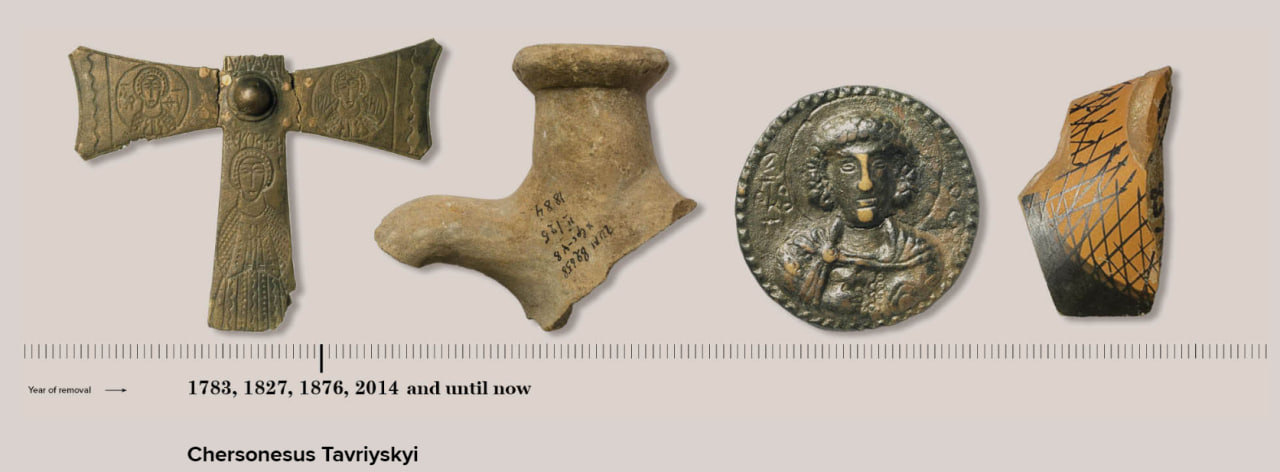
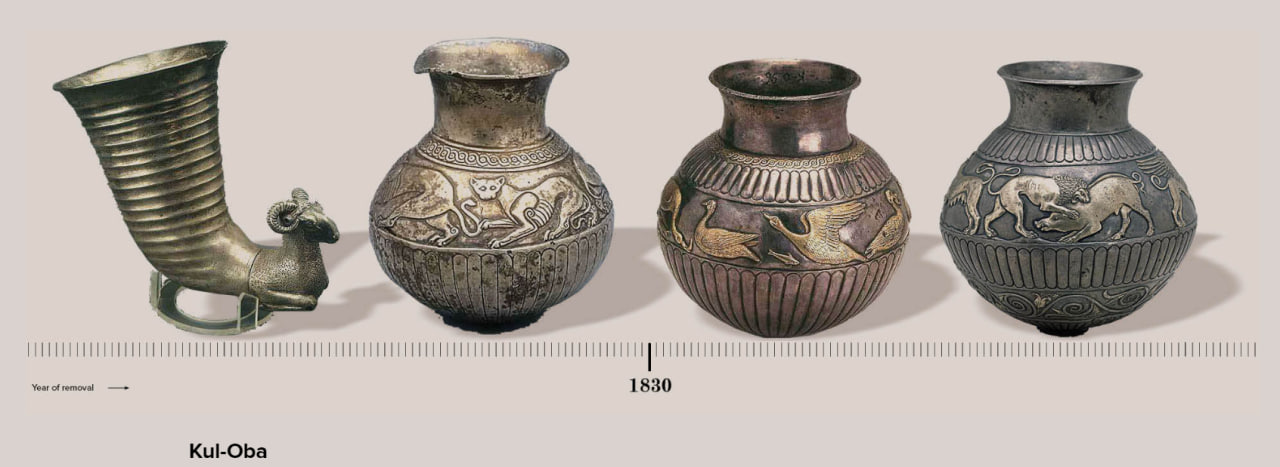
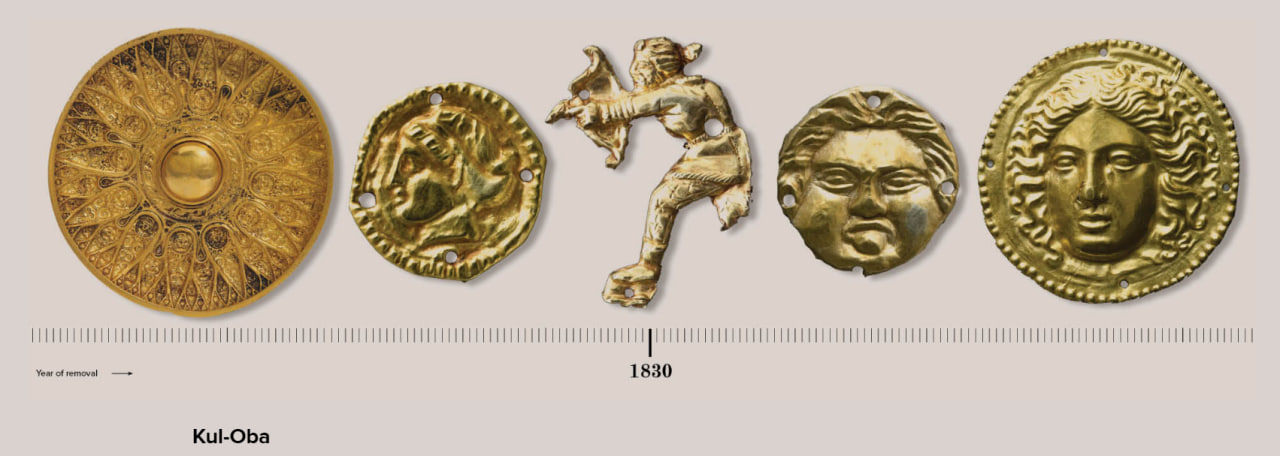
Some of the artifacts from Ukraine found in two Russian museums.
Screenshots from https://texty.org.ua/
Serhii Kot, a researcher on the processes of identification and restitution of Ukrainian cultural heritage, noted in his book that one of the most famous ways in which Russians appropriated cultural property was the failure to return exhibits from Ukrainian museums after they had been exhibited at All-Union exhibitions in Moscow and Leningrad (Saint Petersburg). In particular, the author describes how Russian museums appropriated outstanding exhibits from the collections of the modern Bohdan and Varvara Khanenko National Art Museum and the National Art Museum of Ukraine. In 1934, for example, the State Museum of Oriental Cultures in Moscow hosted a large-scale exhibition for which the Russian (RSFSR) People’s Commissariat of Education requested exhibits from the then State Art Museum in Kyiv. In accordance with the law of 27 May 1934, a total of 27 items from the museum’s collections were transferred to Moscow, including ancient bowls, bronze and ceramic jugs, candlesticks, several miniatures, fabric samples, and patterned tiles. After the exhibition ended, the Russian museum was obliged to return all the exhibits safe and sound to Kyiv, but they were never returned.
There are also records of the export of unique collections of paintings and sacred art, including ancient icons, frescoes, and liturgical objects. The Soviet atheist regime systematically fought against religious identity and tried to destroy monuments of Ukrainian Christian heritage, including the pearl of Kyivan Rus’ architecture, the St Michael’s Golden-Domed Cathedral.
First, the ancient mosaics and frescoes were dismantled, and on 14 August 1937 the Soviet authorities committed a brutal crime against cultural and Christian heritage – they destroyed St Michael’s Golden-Domed Cathedral with explosives. After the destruction of the cathedral, the Soviet NKVD spent the whole night cleaning the ruins of the shrine, searching for and stealing religious and cultural values for their own profit.
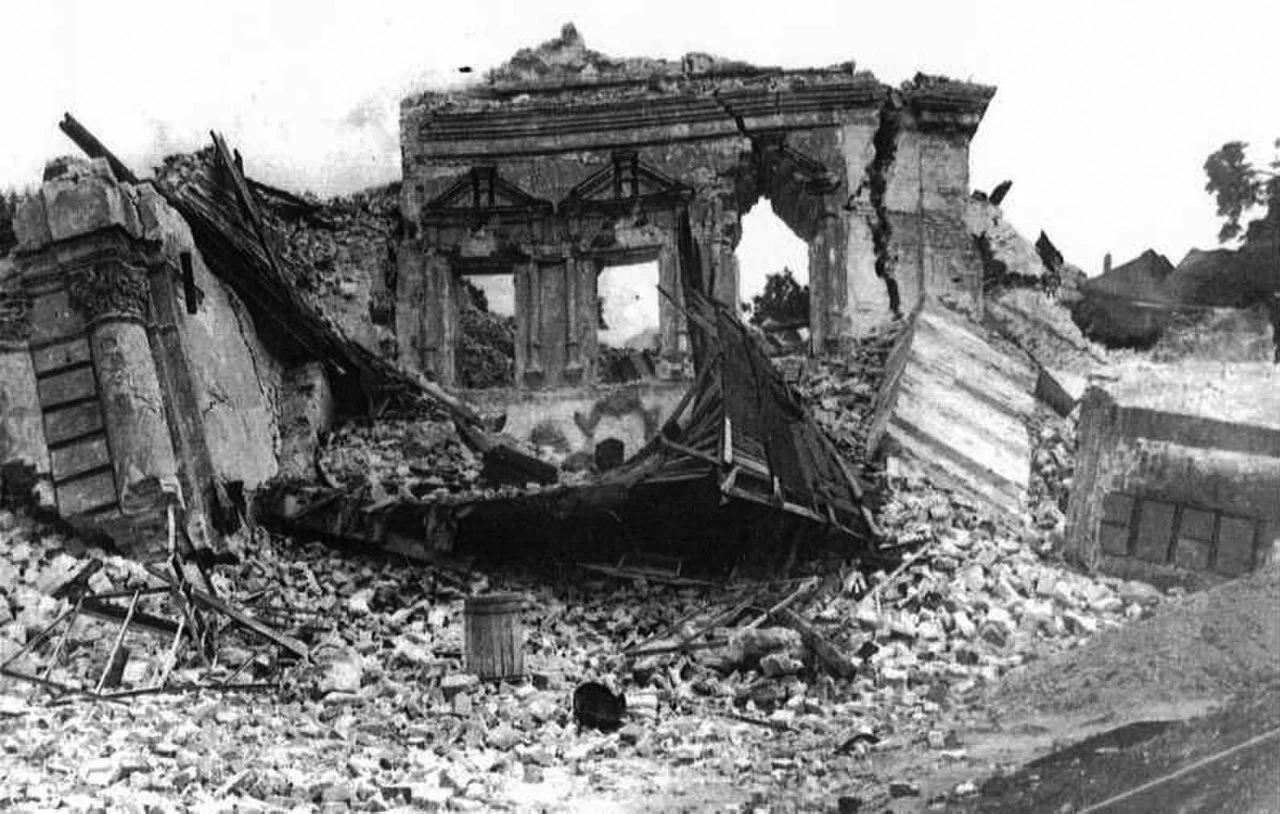
The ruins of St Michael’s Golden-Domed Monastery after the bombing in August 1937.
Photo: Wikipedia
Between 1935 and 1937, almost all the historic buildings of the St Michael’s Monastery were demolished, as was the nearby St Vasylivska (Trishviatytelska) Church.
Art history researchers Natalia Khamaiko and Anna Yanenko note that in the spring of 1937, the State Ukrainian Museum in Kyiv (now the National Art Museum of Ukraine) opened an exhibition of art monuments of Kyivan Rus’. In particular, mosaics and frescoes from the Golden Cathedral of St Michael were exhibited. In the same year, however, the director of the Ukrainian Museum, Pimon Rudiakov, was suppressed and the museum’s exhibition was closed. Some of the mosaics and frescoes, along with a slate carving, were sent to Moscow for a temporary exhibition at the State Tretyakov Gallery, from where they were never returned.
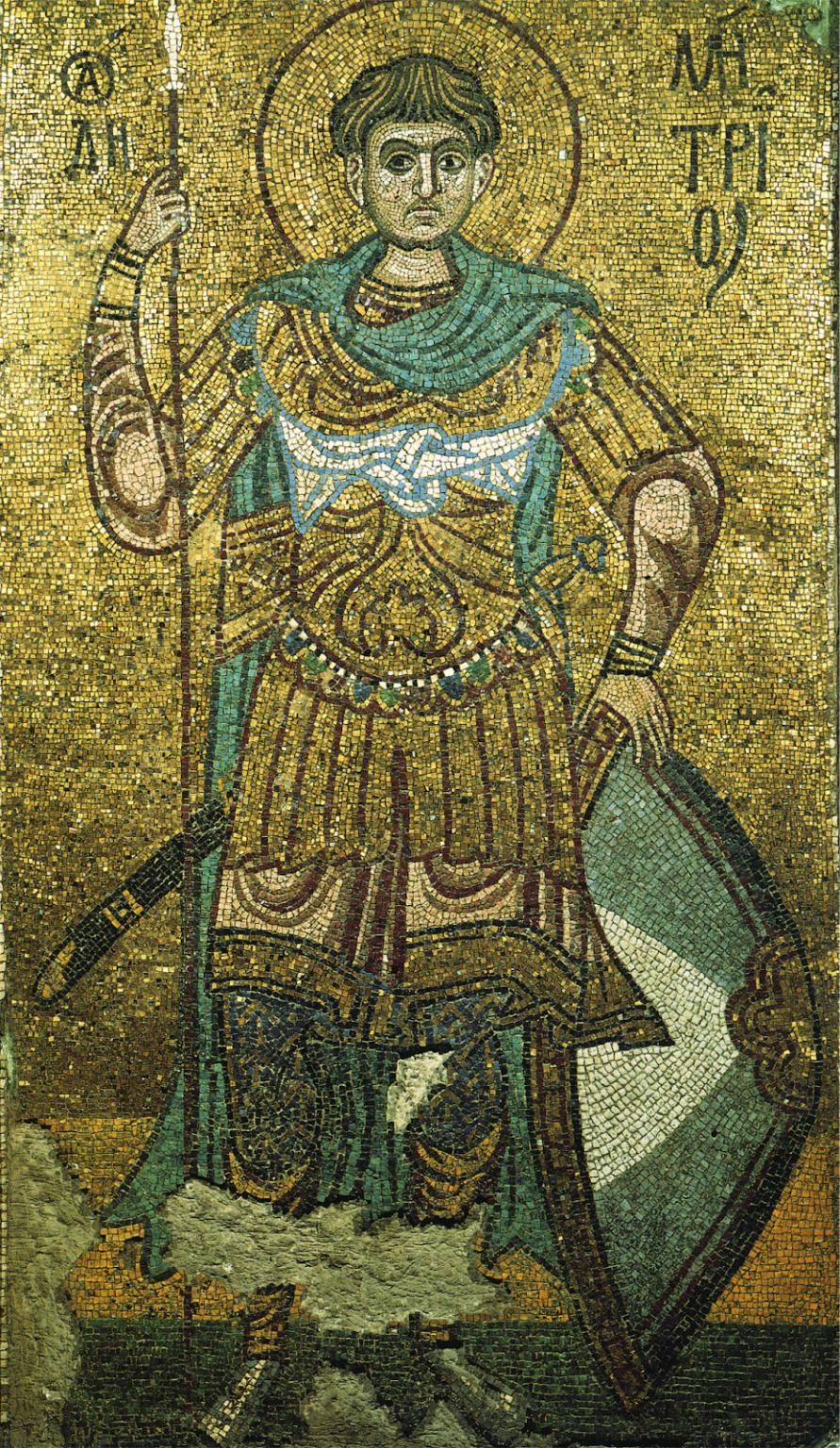
Demetrius of Thessalonica. Mosaic of the Cathedral of St Michael’s Golden-Domed Monastery in Kyiv. Now in the State Tretyakov Gallery, Moscow, Russia.
Photo: Christianity in Art
During the Second World War, under the pretext of evacuation, the Soviet authorities took boxes with cultural, religious, and museum values and precious exhibits (gold, platinum, silver, brocade, precious liturgical crosses, and icons) from Kyiv museums, including those located on the territory of the Kyiv Pechersk Lavra to the Bashkir branch of the USSR State Bank in Ufa (present-day Russia) for storage. At the same time, after the occupation of Kyiv, German troops also took parts of the collections of the Historical Library, as well as more than 406 items from the exhibition of the weapons department of the Central History Museum. For some of these objects taken from Ukraine during the Second World War (by both the Communists and the Nazis) the question of their return remains open to this day.
Stealing cultural heritage in temporarily occupied Crimea
After Russia’s occupation of the Crimean peninsula in 2014, the cynical theft of exhibits from Ukrainian museums has begun, and some historical and cultural sites are at risk of destruction. Daria Pidhirna, an expert at the Regional Centre for Human Rights, notes that during the occupation of the peninsula the Russians have already appropriated at least 12,612 monuments of national and local significance, the property and funds of 773 libraries, 26 museums, and 5 historical and cultural reserves, which contained more than 1.2 million museum objects. At the same time, during the 2022 archaeological season, more than 2 million artifacts were discovered in Chersonesos alone, of which 200,000 were brought to the territory of the Russian Federation.
The expert also noted the illegal auction of Ivan Aivazovsky’s painting “Moonlight Night” at the Moscow auction house, which was illegally transferred to the Simferopol Art Museum at the beginning of the Russian occupation of Crimea in 2014. This was also reported by the former Deputy Prosecutor General, former Prosecutor of the Autonomous Republic of Crimea, Gunduz Mammadov. Estimating the value of the illegally transferred Ukrainian artwork, “Russian experts” announced the painting is worth 100 million rubles ($1 mln).
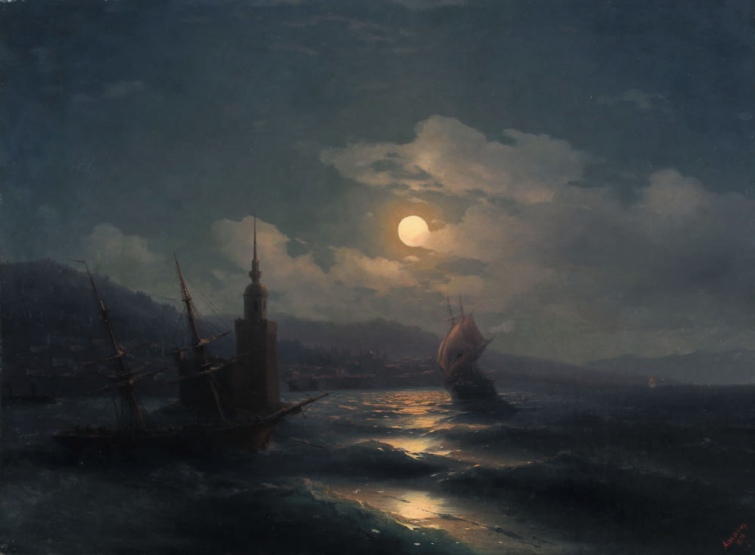
Ivan Aivazovsky’s painting “Moonlight Night”, 1878.
Theft of cultural heritage after the Russian full-scale invasion in 2022
After the full-scale Russian invasion in February 2022, the Russian military continues to export Ukrainian cultural heritage on a massive scale. This was particularly evident in the Kherson region. During the occupation of the city of Kherson, the Russian military systematically removed cultural artifacts from the Kherson Art Museum. These facts are reported by the Director of the Kherson Art Museum, Alina Dotsenko: between 31 October and 4 November, the Russian military loaded paintings, icons, sculptures, and antiques into trucks for further export to the occupied Crimean peninsula and the territory of the Russian Federation. During the occupation, more than 15,000 exhibits were stolen from the collections and museums of Kherson.
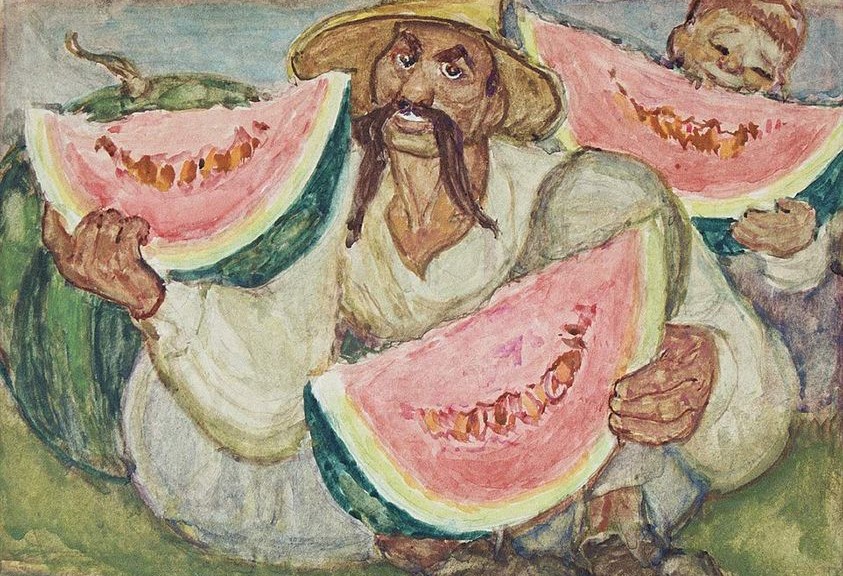
“Generosity” by Mykola Pysankо. One of the paintings stolen by Russians from the Kherson Art Museum.
Photo: the Kherson Art Museum / Facebook
Their future fate is a matter of deep concern, and the return of Ukrainian cultural property is extremely important for the preservation of Ukraine’s unique cultural heritage. Andrii Malgin, the director of the Tavrida Museum of Local History and an adviser to the Russian occupation authorities in Crimea, confirmed the theft to Spanish journalists, noting that his institution had “accepted” about 10,000 works of art. Malgin has been sanctioned by the EU and Switzerland for his involvement in the theft and illegal storage of stolen paintings from Kherson.
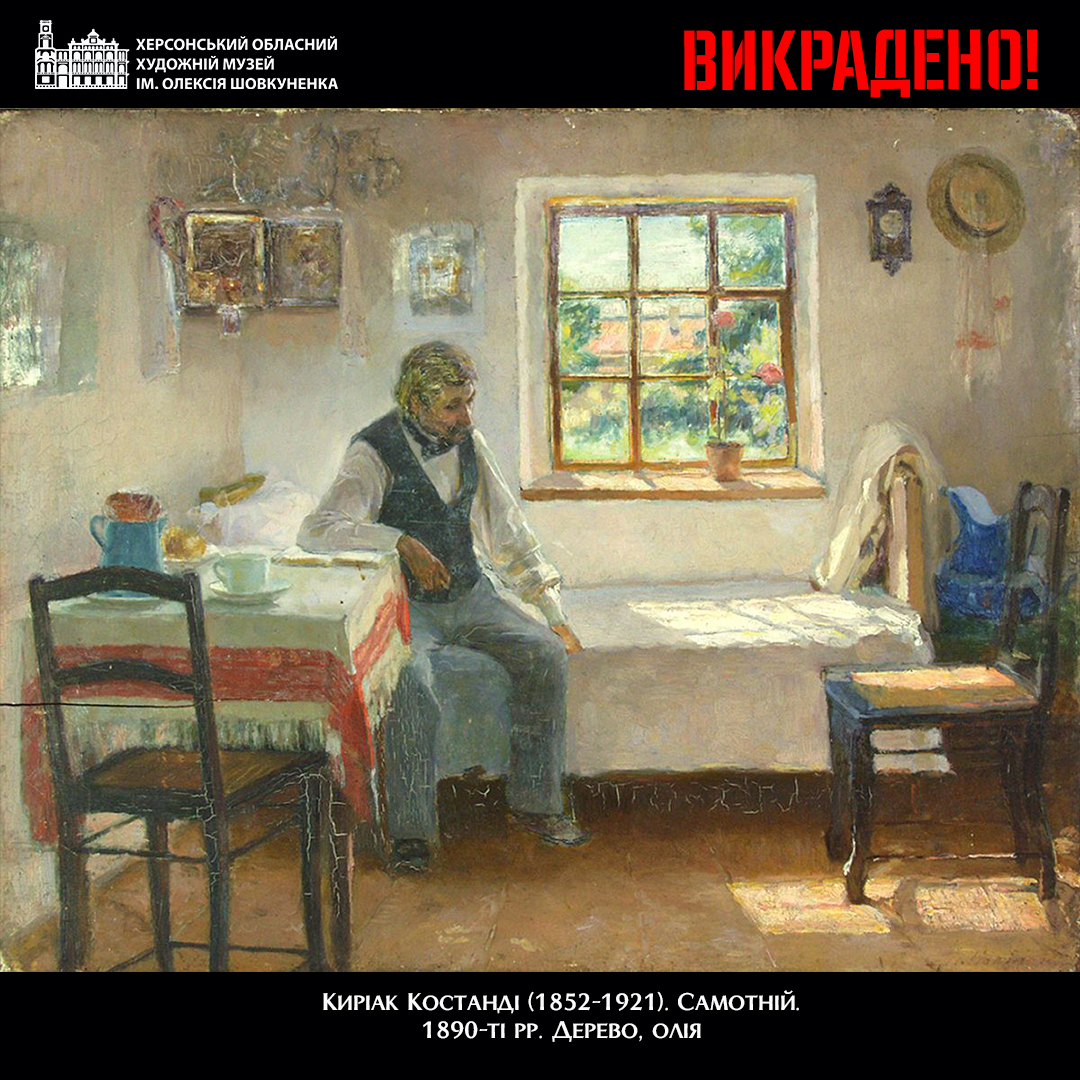
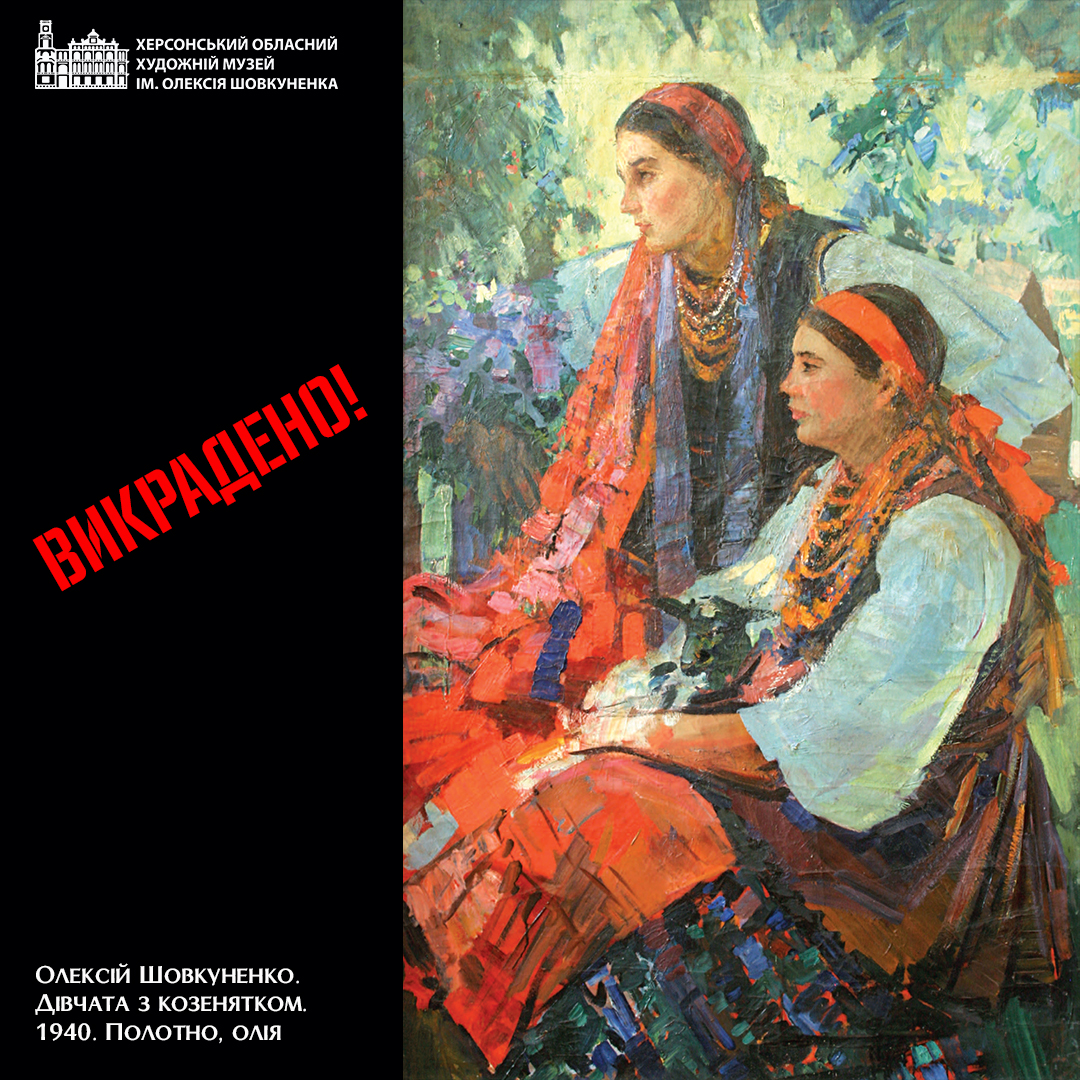
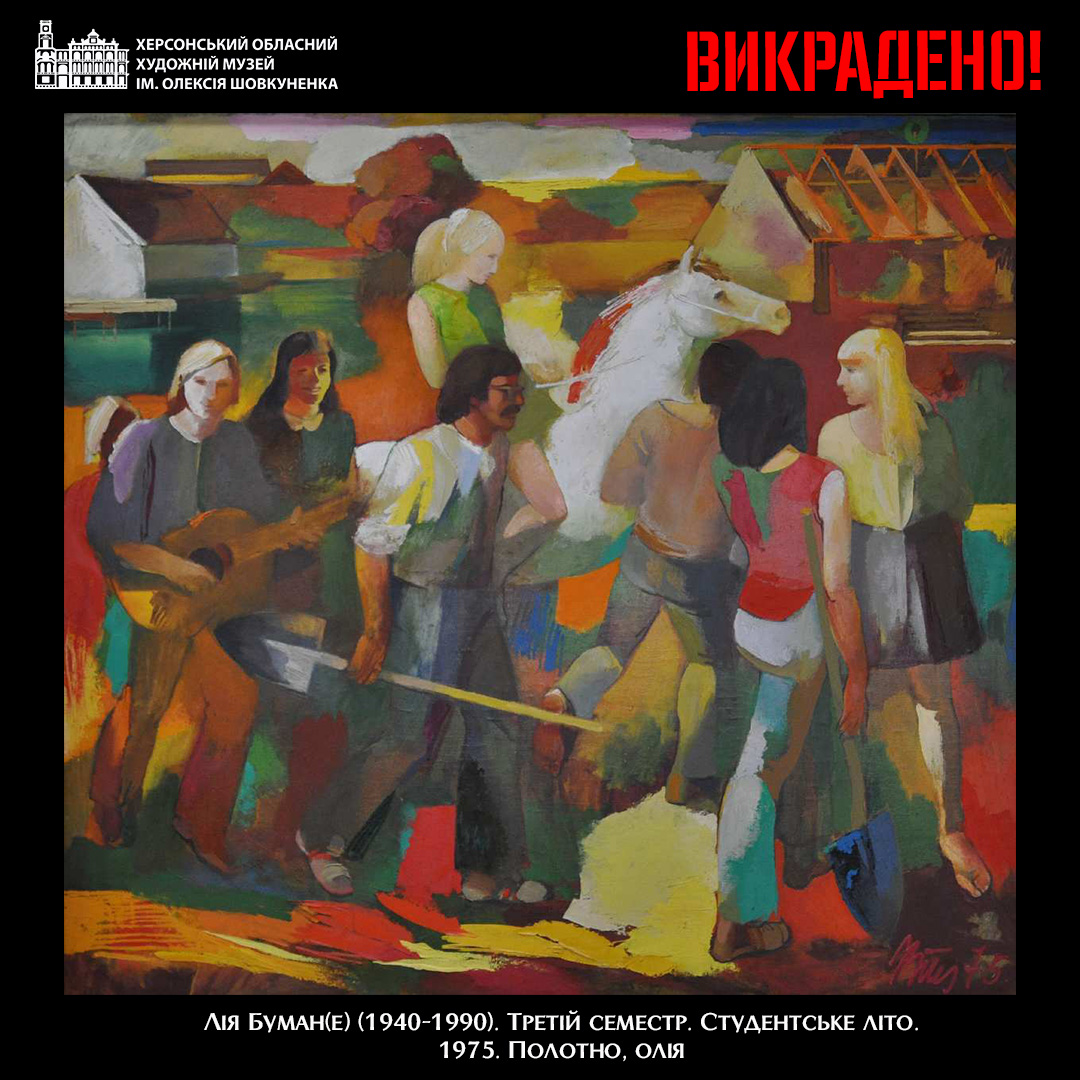
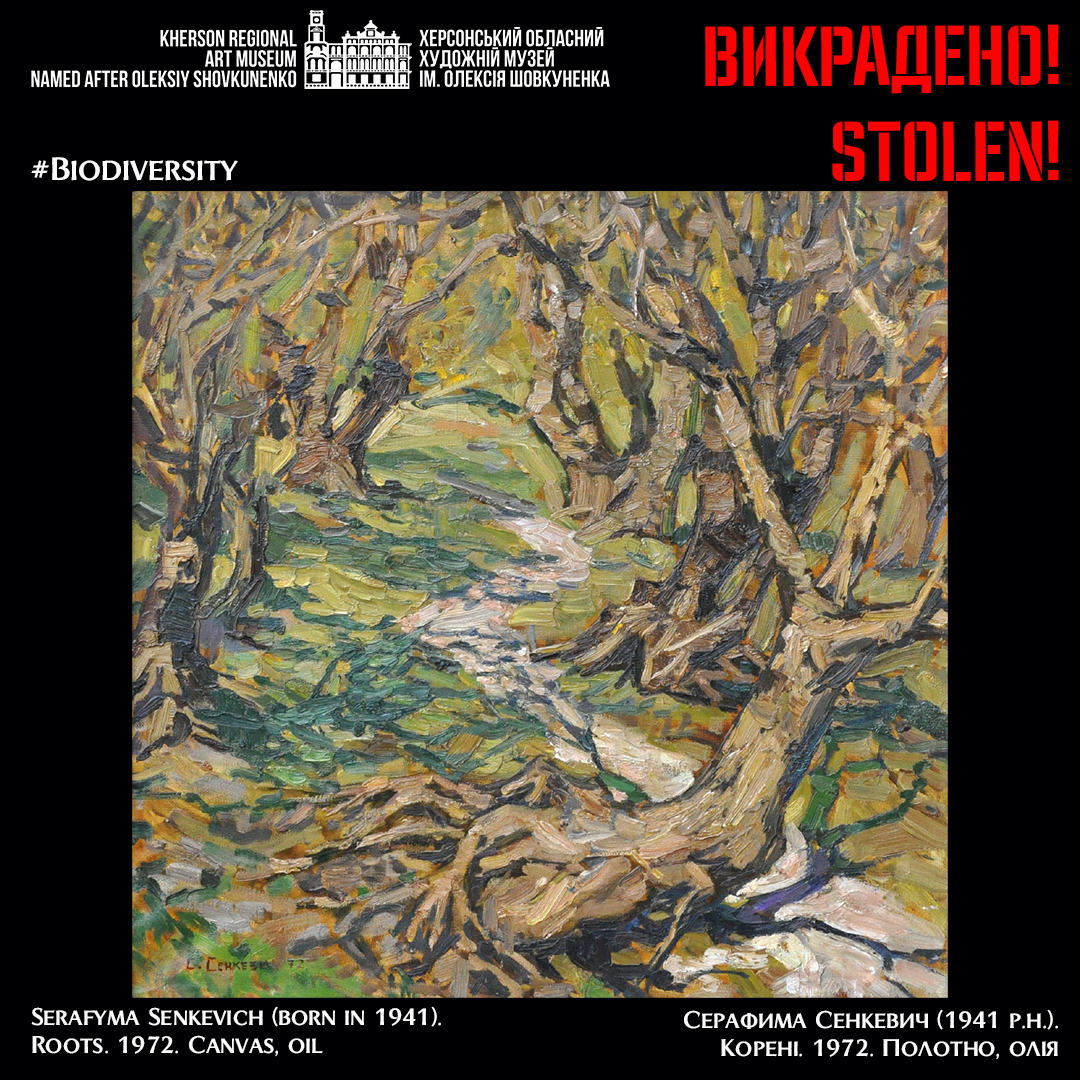
Some of the art stolen from Kherson Art Museum.
Photo source: Kherson Art Museum / Facebook
The works of art and cultural values of the Mariupol museums also suffered a tragic fate. For example, from the destroyed Kuindzhi Museum in Mariupol, the occupiers stole the original painting by Ivan Aivazovsky, two works by Mykola Dubovsky, a work by Hryhoriy Kalmykov – a posthumous portrait of Kuindzhi from 1910, a bust of Arkhip Kuindzhi by sculptor Volodymyr Beklemishev, three unique icons from the late 19th century, a Greek Bible from 1811, and works of decorative and applied art, Suspilne Donbas reports.
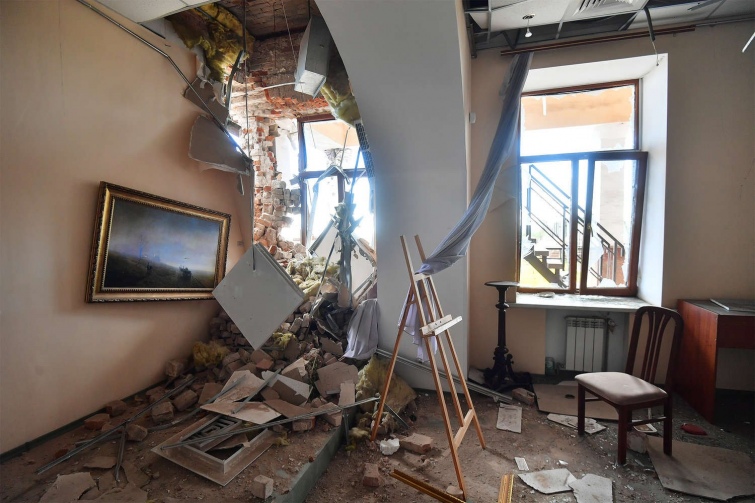
Destroyed Kuindzhi Museum in Mariupol.
Photo: Olexandr Hore
Finally, it must be said that the above war crimes are a manifestation of genocidal practices against Ukraine and Ukrainian culture. Victoria Soloshenko, a researcher on the restitution of cultural property, notes that Russia has deliberately sent a “group of specialists” to Ukraine to smuggle cultural property from the temporarily occupied territories of Ukraine to Russia, as reported also by The Guardian. In this regard, it is extremely important that the scientific community and experts conduct a comprehensive investigation into the causes and irreparable losses caused by these actions. In addition, those responsible for issuing criminal orders and committing these crimes must be brought to justice.
Author: Vladyslav Havrylov,
research fellow with the Collaborative on Global Children’s Issues at Georgetown University,
Invited analytic researcher at The Charitable Foundation “East SOS”
Source Ukraine.ua
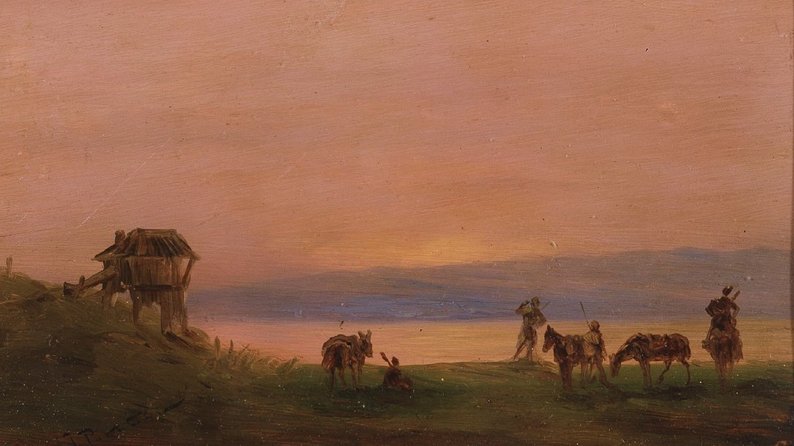
Рhoto: “A picket on the river bank. Sunset”, Ivan Pokhitonov, 1890х. One of the paintings stolen by Russians from the Kherson Art Museum. Тhe Kherson Art Museum / Facebook