

Ukrainian Easter traditions
On April 20th, Christians of the Eastern rite in Ukraine will celebrate Easter. Traditionally, on this day, many families and close friends will gather around a large table with a variety of Easter dishes. Over many millennia, we have developed many traditions, rituals, and beliefs that have been passed down from generation to generation. We will tell you about some of them.
Preparation for Easter begins a week earlier, which is called Holy Week or White Week. Before the holiday, households had to clean everything from the winter dirt and debris, and this had to be done before Thursday.
On Monday, they washed tables, benches, windows, doors, everything was tidied and cleaned.
On Tuesday, they organized a big laundry day – washing almost everything in the house. At the same time, the head of the household would tidy up in the barns.
On Wednesday, they finished everything they hadn’t managed to do in the previous days. and completed gardening work. On this day, they took out the best clothing from the chests for the holiday. If it was traditional to make a special clothes for Christmas and for Easter, it involved shirt, boots and beads.
Thursday of this week is called clean Thursday in Ukraine (also it is Mandy Thursday). Before sunrise, they cleaned in the houses, storerooms, and courtyards. And bathed in flowing water, which supposedly washed away all sins and diseases from a person.
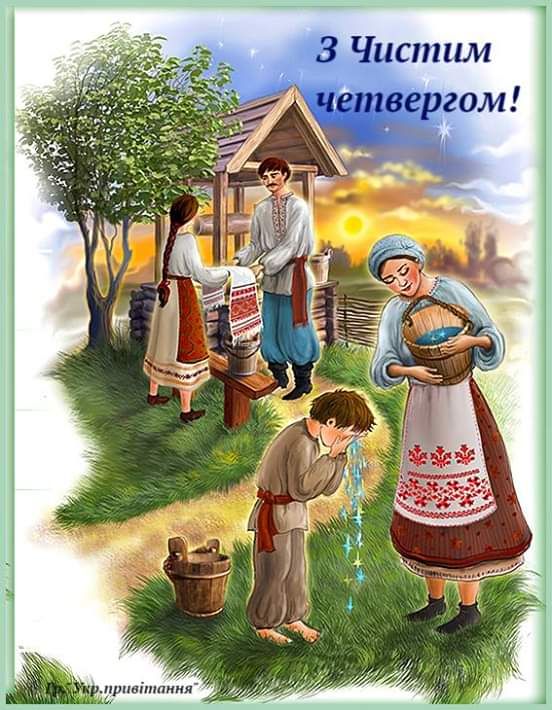
According to Christian belief, the Last Supper, when Judas betrayed Jesus Christ, occurred on Maundy Thursday. To commemorate the earthly sufferings of the Savior, a Passion service, or “Passions,” takes place in the church in the evening. Previously, while the service was ongoing, people in village homes tried to maintain silence and refrain from laughter. The bells also fall silent after Maundy Thursday until the Easter service.
On Thursday, from the service, they brought home a “passion” candle in such a way that the flame did not go out. Later, its flame was used to “burn” a cross on the doorframe at home, believing it would ward off evil spirits. Furthermore, the passion candle was lit in front of icons if the household members were afraid of something: storms, long illness, or difficult childbirth.
On Good Friday, the churches carry out the shroud, which is circled around the temple three times. Before the procession of the shroud, the faithful do not eat anything. Afterwards, they dine on fasting dishes. Work involving sewing, spinning, or chopping is also forbidden on this day, as it was the day Jesus Christ was crucified. The only permitted tasks for housewives are baking Easter bread and planting cabbage.
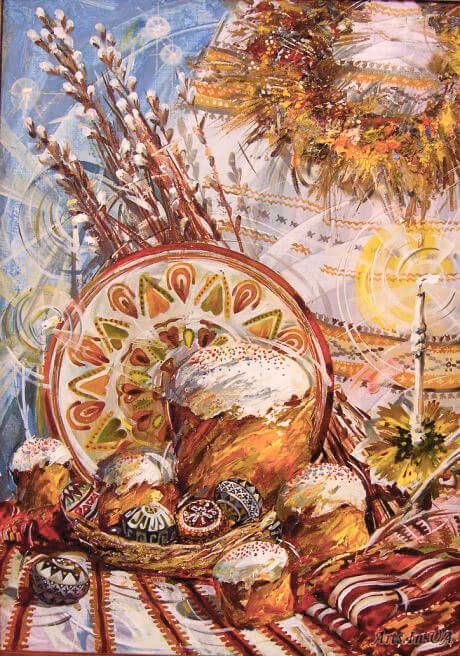
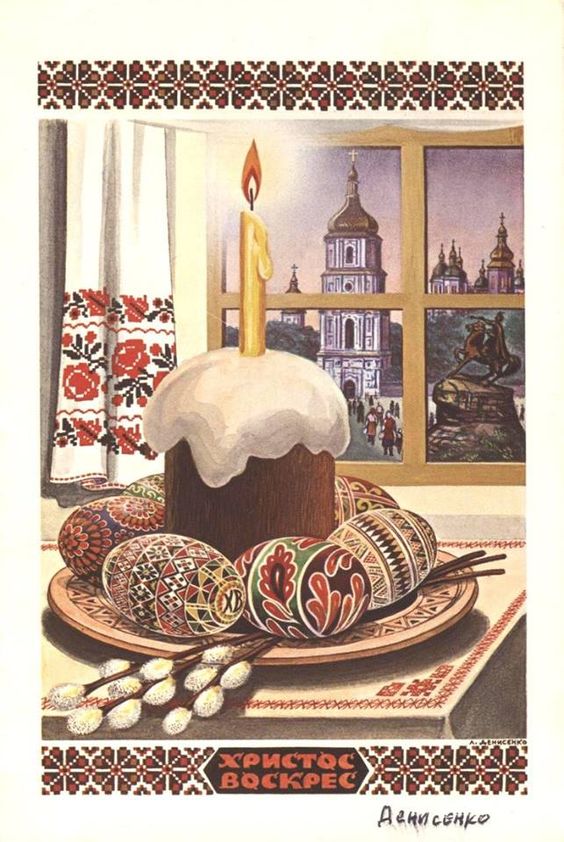
The night before Easter held a sacred significance for Ukrainians and heralded the good news of Christ’s resurrection. Once, on the night from Saturday to Sunday, young men would light bonfires near churches. Gatherings for the Easter fires began at dusk, where games were played, and spring songs and round dances were sung. On this night, a fire—either a candle or a lamp—was also kept burning in the homes.
In the evening, Ukrainians went to church where they attended the evening service. At midnight, the procession of the cross began, after which the service continued. After the liturgy, towards dawn, priests began to bless the baskets with the food.
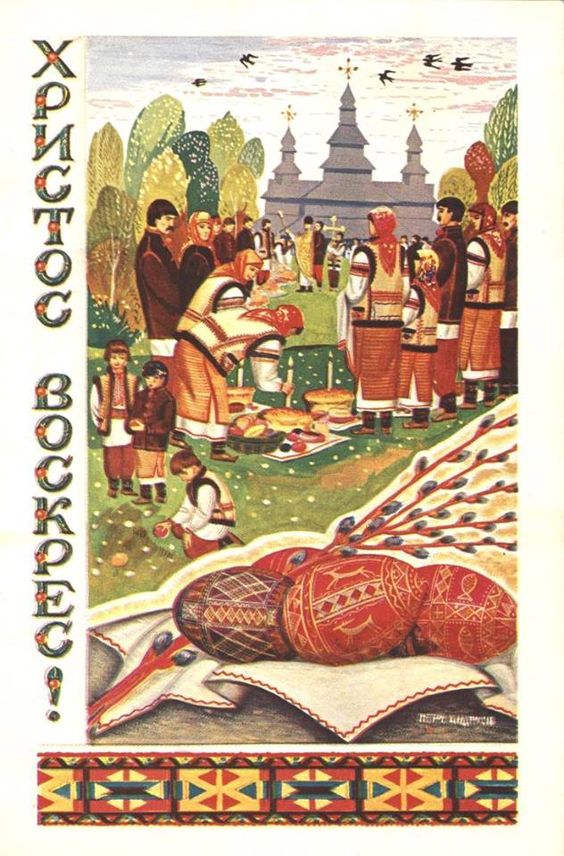
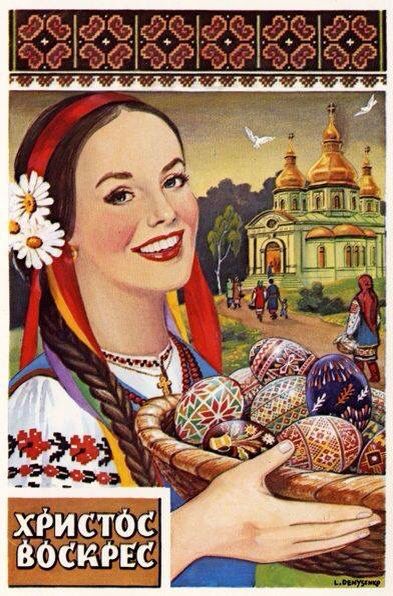
In the morning, after the church service, families would go back to their homes to begin “greeting Christ” and “breaking the fast” with the blessed food. In some places, the head of the household would first go around the barn, feeding the livestock, and looking after the farm, before entering the house and “breaking the fast.”
The festive meal began with a prayer. The table was lavishly set with Easter bread, painted eggs, roasted piglet, various meat dishes, pies, cheese and sour cream, drinks. However, they always began “breaking the fast” with a blessed egg.
After the family meal, young women would gather to sing traditional spring songs and round dances. The most cheerful girls usually led these activities. They also enjoyed swinging on swings and playing games on this day.
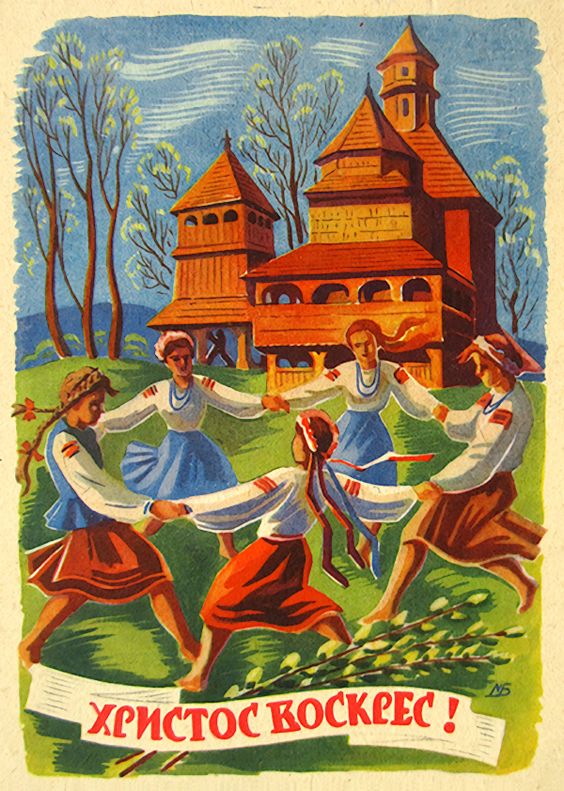
The first Monday after Easter is called “Hanging Monday” because everyone was “hanging around” visiting their relatives and friends.
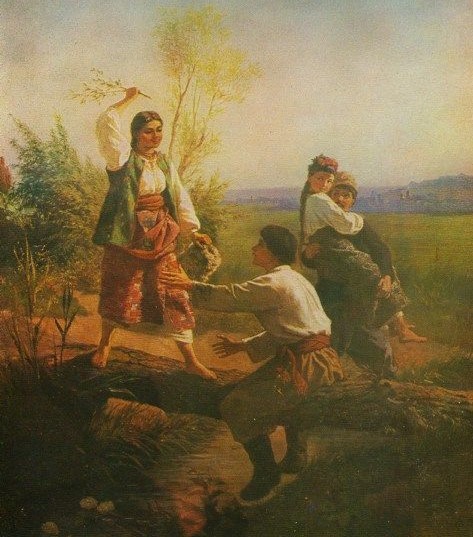
On this day, boys splash water on girls to ensure they are healthy and happy throughout the year. Girls instead, in Boyky region, hit the boys with nettles. Children go “crossing” — greeting relatives, godparents, neighbors, and good acquaintances for the holiday. In return, relatives give the children sweets and gifts.
The Easter celebrations conclude with visits to the graves of relatives. It is believed that on Easter, God opens heaven and hell, allowing the souls of deceased ancestors to visit their families, and during the entire Easter week, they remain on earth alongside the living.
We greet you with the bright holiday of Christ’s Resurrection, may the song of Easter bells bring only good news!