
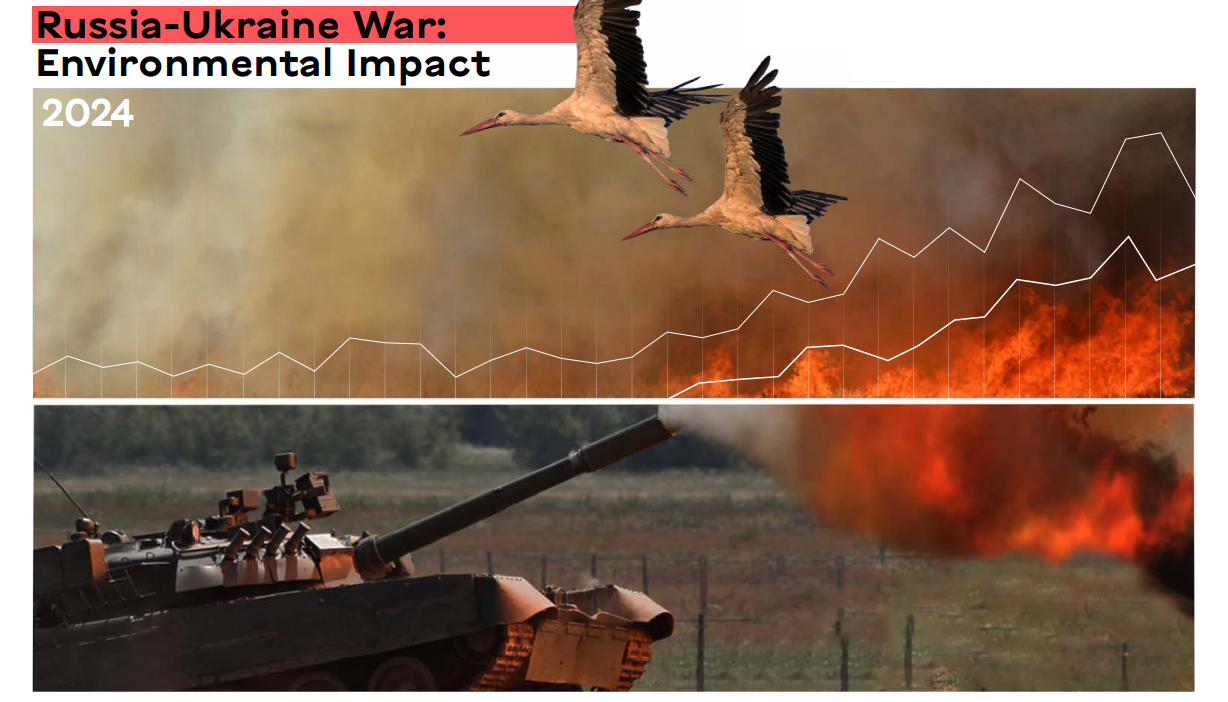
Russian-Ukrainian war: impact on the environment
A thousand days have passed since the beginning of russia’s full-scale invasion of Ukraine—1,000 days of pain, loss, and destroyed lives. This conflict, the largest in Europe since World War II, has dealt a devastating blow not only to people but also to Ukraine’s environment. Missile strikes, wildfires, mined territories, and chemical contamination have turned ecosystems that took millennia to form into dead zones. It is not just forests, rivers, or nature reserves that are being lost; it is a natural heritage that belonged to Ukraine and the world.
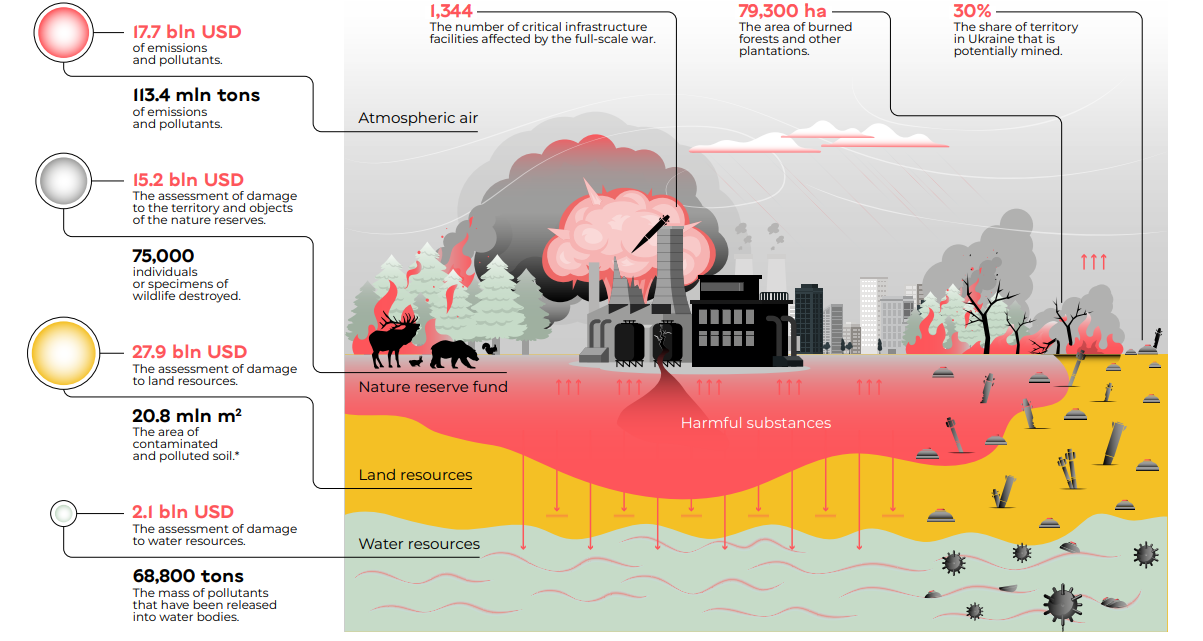
This second edition of infographic research reflects the scale and depth of the environmental crisis caused by the war. Every statistic, every map, and every story presented here serves as evidence of the ecocide russia is committing against our nation:
– Nearly $63 billion in environmental damage caused by the war.
– At least 23,000 fires ignited by explosions.
– 26 protected areas occupied or under constant shelling.
– 30% of Ukraine’s territory needs demining.
And as the war continues, the scale of environmental damage inflicted on Ukraine keeps growing. Every day, russian shelling causes new destruction, pollution, fires, and landmines, transforming unique natural areas into zones of ecological catastrophe.
In 1,000 days of war, fires caused by shelling have destroyed more than 680,000 hectares of forests. Forests in Donetsk, Luhansk, Kharkiv, and Kherson regions have lost up to30% of their area. Unique natural territories, such as the Kinburn Peninsula, have almost entirely burned down. National parks, including “Askania-Nova” and “Lower Dnipro,” have suffered mass fires and the effects of landmines.
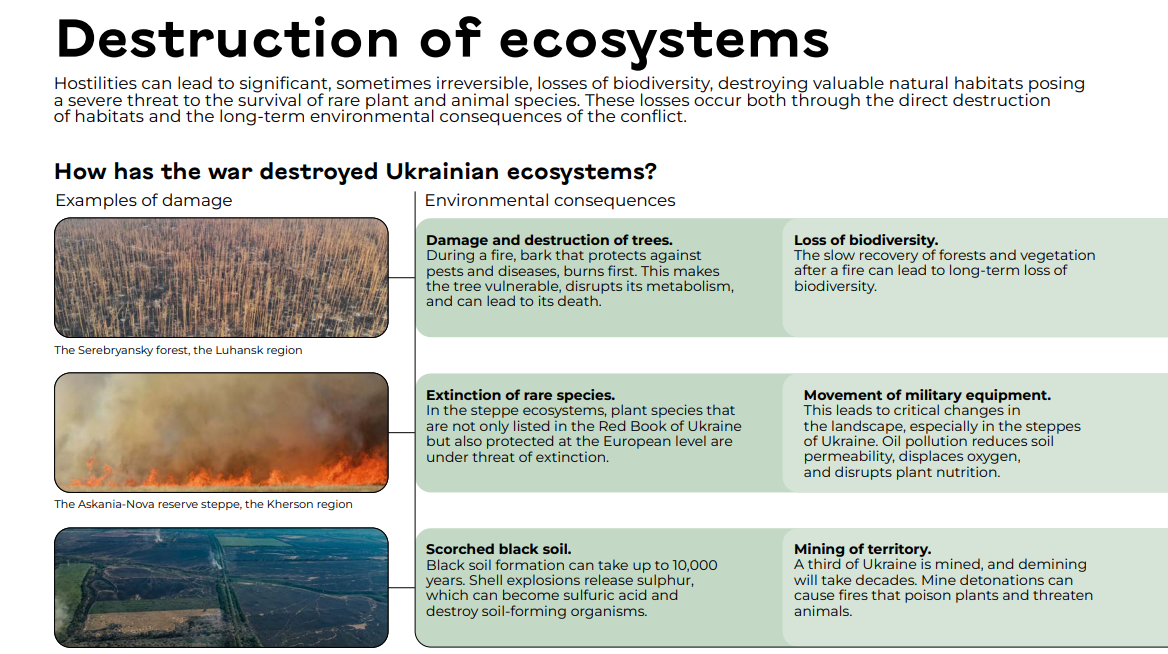
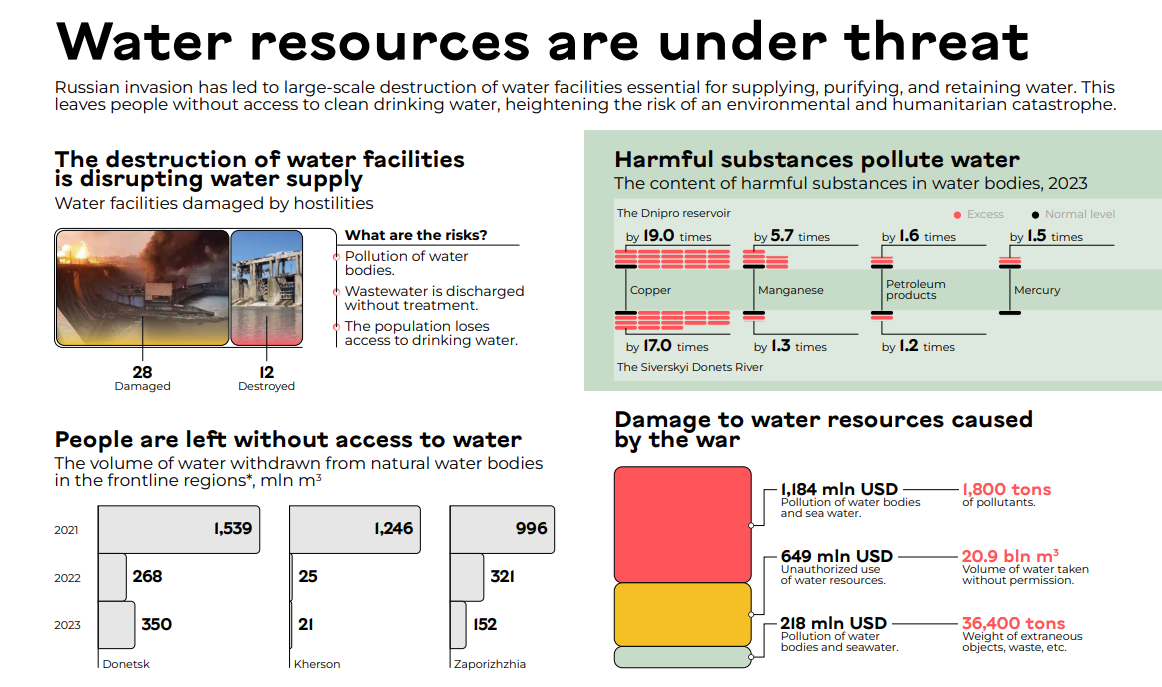
Explosions and shelling have polluted rivers and reservoirs, including the Dnipro, Siverskyi Donets, and Southern Bug. The destruction of the Kakhovka Hydroelectric Power Plant dam in June 2023 marked a major environmental disaster. The floodwaters inundated 55,000 hectares of land, carrying chemicals, oil products, and even landmines into the soil and water bodies. Ukraine also lost one of its largest irrigation systems, critical for the southern regions.
Missile strikes and fires have released over 67 million tons of carbon dioxide into the atmosphere. The burning of oil depots, factories, and chemical storage facilities has contaminated the air with carcinogenic substances, posing a significant risk to the health of humans and animals.
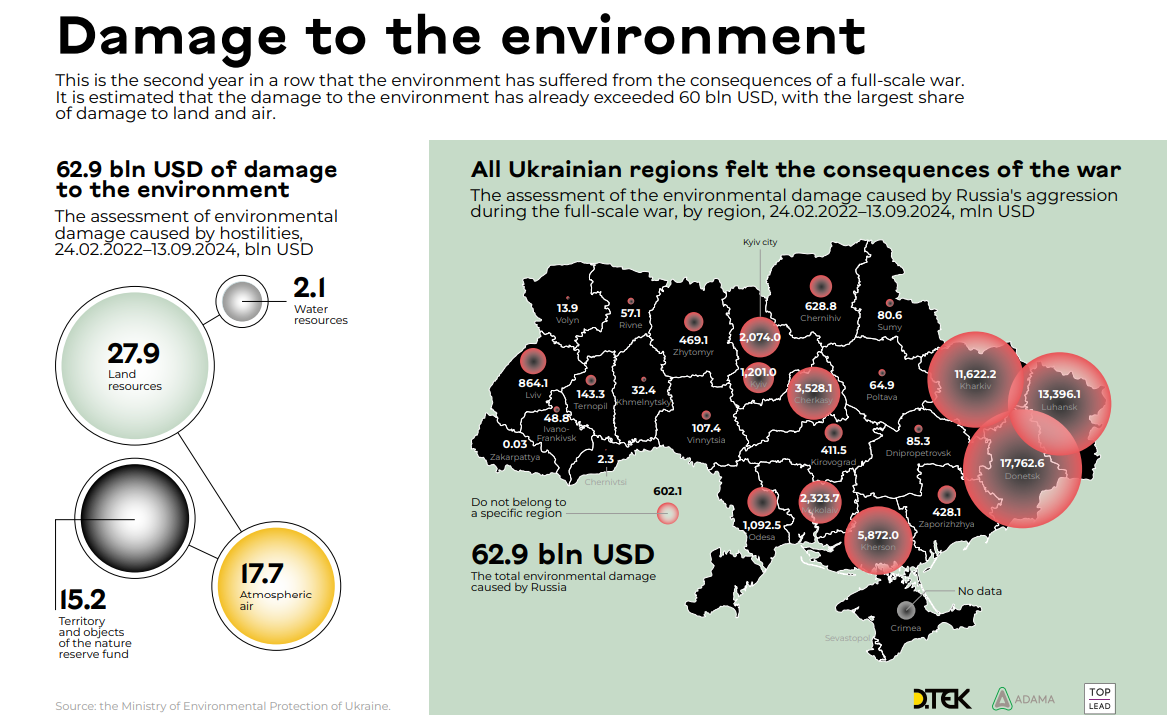
As of September 2024, the environmental damages inflicted on Ukraine are estimated at $63 billion. The largest share—over 40%—is attributed to the loss of land resources. These consequences are expected to affect Ukraine for decades.
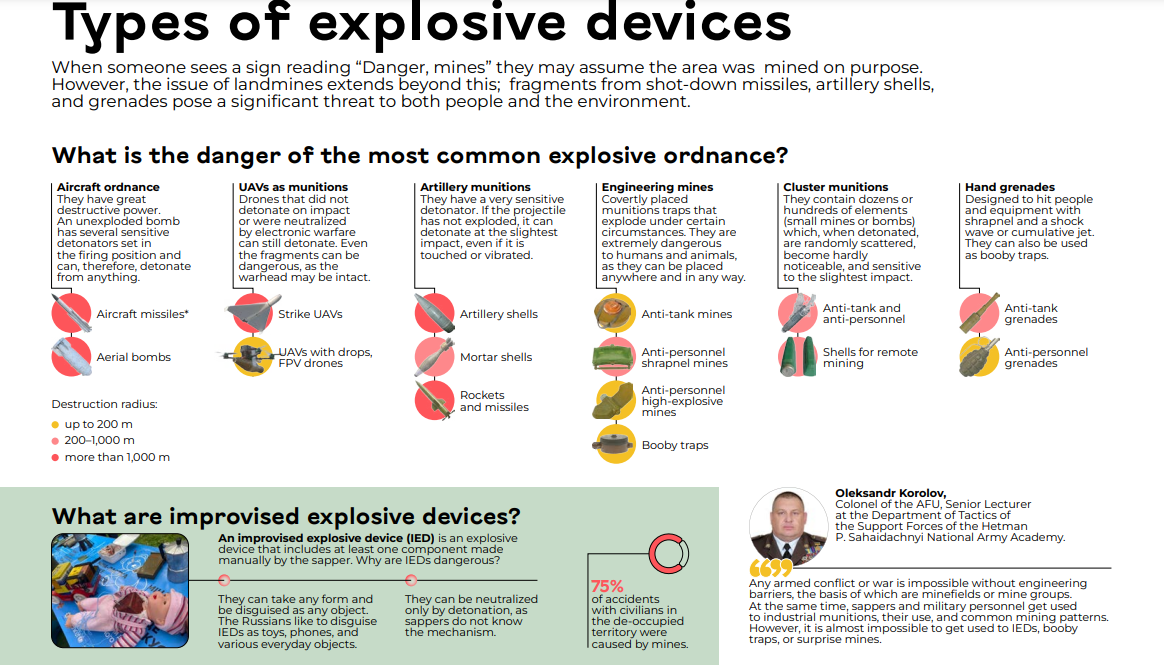
Ukraine has become the most heavily mined country in the world, with nearly 174,000 square kilometers of territory requiring demining. This area exceeds the size of countries like England or Greece. Mines not only make agricultural land unusable but also destroy natural habitats and pose a long-term threat to both people and wildlife.
However, this research is not solely about losses. It is also a story of hope—hope for recovery and justice. Ukraine is strong and resilient, and so is its nature. After victory, we will restore what has been destroyed, making our land even more beautiful than it was before the war.
Thank you to everyone fighting for the future of our land!
Research:
RUSSIAN-UKRAINIAN WAR: ENVIRONMENTAL IMPACT